
Rapid Prototype Casting for Complex, High-Precision Components
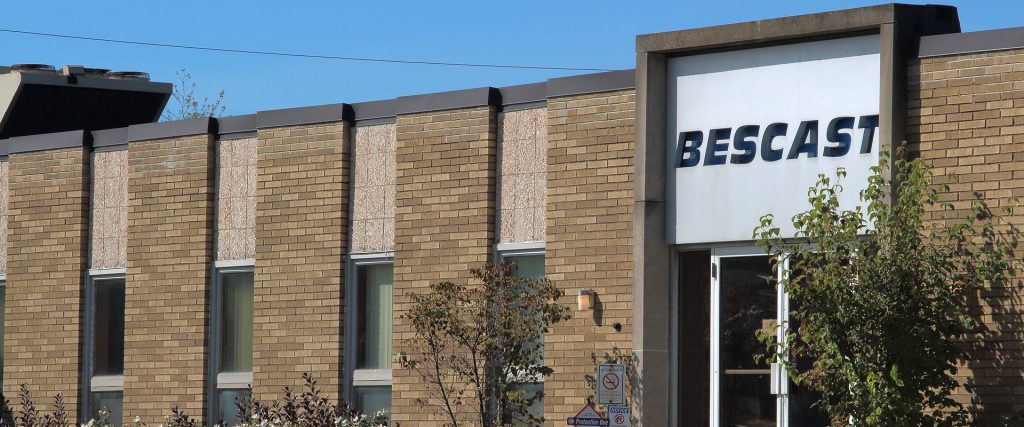
When timelines are tight and tolerances are critical, rapid prototype casting delivers fast, functional results that meet production-level standards. At Bescast, we specialize in precision investment casting designed for early-stage product development, component validation, and pre-production testing.
CURRENT PRODUCTION
Manufacturing Capacity
• 75,000 ft2 manufacturing facility
• 10,000 ft engineering and customer service
• 200+ full-time employees

Alloys Currently Poured on a Production Basis
• 15-5PH
• 17-4PH
• 300 Series
• 400 Series
• MM509
• L605
• X40 (S31)
• WI-52
• HastX
• IN625
• IN713
• IN718
• IN738
• IN792
• MM247
• R77
• R80
• R125
• U500
Quality Certifications
• AS9100 Rev D
• Nadcap
• Heat Treat
• NDT (Non-Destructive Testing) (Radiography & Penetrant)
• Welding
Approved Supplier To:
• Advanced Atomization Technologies
• Collins Aerospace
• Eaton Corporation
• GE Aviation
• Parker Hannifin
• Pratt Whitney Canada
• Prat Whitney America
• Rolls Royce N.A.
• Siemens Energy
• Solar Turbines
• Woodward
Rapid Prototyping & Short-Run Investment Castings
Our process allows engineers and manufacturers to quickly turn CAD models into cast parts using the same high-performance alloys and dimensional tolerances used in full-scale production. That means no compromises on material integrity or part complexity and no time lost waiting on expensive tooling or long lead times.
From aerospace compressor blades to impellers and structural vanes, we produce fully functional prototypes that stand up to the demands of real-world testing. Whether you need a single prototype or a short-run bridge to production, Bescast provides quick turnarounds on castings without cutting corners on accuracy or quality.
Why Manufacturers and Engineers Turn to Bescast for Prototype Casting
Our rapid prototype casting process gives you the speed you need without compromising on precision. We cast fully functional prototypes, so you’re not working with stand-ins or samples. You’re testing the real thing sooner.
Made for Complex Designs and Demanding Use
Prototypes from Bescast aren’t limited by geometry. We regularly cast thin-walled, tight-tolerance parts with intricate internal features.
Common applications include:
- Blades and fuel system parts for high-precision jet engine parts
- Critical systems and test components for transportation
- Structural and engine-related parts for military and defense castings
- Valve components, filter screens and other petroleum industry castings
Get to Testing and to Market Faster
Rapid prototyping gives your team room to iterate. Each casting provides a production-grade part you can test and refine before committing to tooling. If a feature needs to change, you’re not locked into a long process.
Material Options That Match Your End Use
We work with the same high-performance alloys found in production environments:
- Stainless steel for strength, corrosion resistance, and repeatable performance
- Nickel-based alloys for heat and stress resistance in turbine and engine components
- Aluminum for lightweight testing and fast-turn parts in development (ideal for rapid prototype aluminum castings)
What Sets Bescast's Rapid Prototype Casting Apart
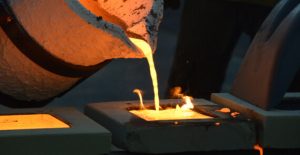
We keep everything in-house to shorten timelines and keep control over every step of the process. When it comes to our investment casting, rapid prototyping includes pattern development using casting simulation software and CAD CAM designs, shell building, casting, CNC machining, and finishing. You’re working with a team that moves fast and gets it right the first time.
Because we manage everything under one roof, you’re not stuck chasing vendors or waiting on approvals. You get a direct line to your engineering team and a streamlined process built for fast timelines.
Tight Tolerances. Clean Details. Functional Results.
We cast complex parts with thin walls, sharp transitions, and challenging internal geometries. Whether your design includes cooling channels or detailed surface features, we produce a casting that reflects your exact model. There’s no need to simplify or compromise your design for the sake of speed.
Certifications That Support Critical Applications
- AS9100 Rev D
- ISO 9001:2015
- Nadcap (including heat treat, welding, and NDT)
Take Advantage of Our Rapid Prototype Casting
You don’t have time to waste on slow timelines or indecision about materials. When your project calls for castings that are precise and production-ready, Bescast delivers.
Our engineers work directly with yours to align on specs and timelines. Whether you’re building a first article or getting ready to scale, we’re prepared to help.
Tell us what you’re building. We’ll show you how our rapid prototype casting process can help you move faster with the accuracy and control your application demands.
Frequently Asked Questions
The $18.1 billion global investment casting market can be confusing, but Bescast has the guidance you need. Here are some common questions people have about rapid prototype casting.
How cost-effective is prototype casting compared to machining?
Machining prototypes out of solid stock works for simple shapes, but it becomes expensive and time-consuming for complex parts. Prototype casting allows you to replicate intricate geometries, internal passages, and thin-walled structures at a lower cost and with faster turnaround than machining alone.
Can Bescast support a bridge between prototyping and full production?
Yes. Many customers start with a single prototype and then request a short run of castings to support pre-production testing. Our vertically integrated process makes it easy to move from one-off prototypes into larger runs without changing suppliers.
What industries benefit most from rapid prototype castings?
Any sector that values accuracy, speed, and durability. We frequently serve the aerospace, defense, and energy industries, but the process is equally effective for industrial equipment and other high-performance applications.
What dimensional tolerances can you achieve on rapid prototype castings?
Because we use the same high-precision investment casting process as our full-scale production lines, we maintain exceptionally tight tolerances. While exact metrics depend on part geometry and alloy selection, we consistently hold industry-standard investment casting tolerances, even on intricate features like internal cooling channels, impellers, and thin-walled structures.
Are the mechanical properties of your prototype castings identical to production-grade parts?
Yes. Unlike rapid prototyping methods that use substitute materials, Bescast pours your prototypes using the exact same high-performance alloys required for production—including aerospace-grade stainless steels, cobalt-based alloys (like MM509), and nickel-based superalloys (such as Inconel 625 and 718). Your prototypes are fully functional and ready for real-world stress and thermal testing.
Do prototype runs undergo the same quality inspections as full production runs?
Absolutely. Because we serve the highly regulated aerospace, military, and defense sectors, our prototyping process is backed by our AS9100 Rev D and ISO 9001:2015 quality management systems. We offer comprehensive, in-house Nadcap-certified Non-Destructive Testing (NDT), including digital radiography (X-ray) and fluorescent penetrant inspection, ensuring your prototype meets rigorous flight and safety standards.
Related Rapid Prototype Casting Articles

Aerospace casting is the backbone of modern aviation, responsible for crafting the essential parts that make flight possible. From jet engines to structural components, these castings handle extreme demands with precision and reliability. Investment casting is a favorite in the industry for its ability to create complex, high-performance parts with incredible accuracy.
Understanding the difference between casting and forging is essential for selecting the right fit for your project. In this guide, we’ll walk through how each process works, where each one shines, and why that distinction matters for precision, complexity, and overall efficiency.
The story of Bescast and the GE LEAP engine is one of timing, innovation and fortitude. Thanks to our forward-thinking attitude, we were able to participate in a golden moment in aviation history that still affects today’s industry.