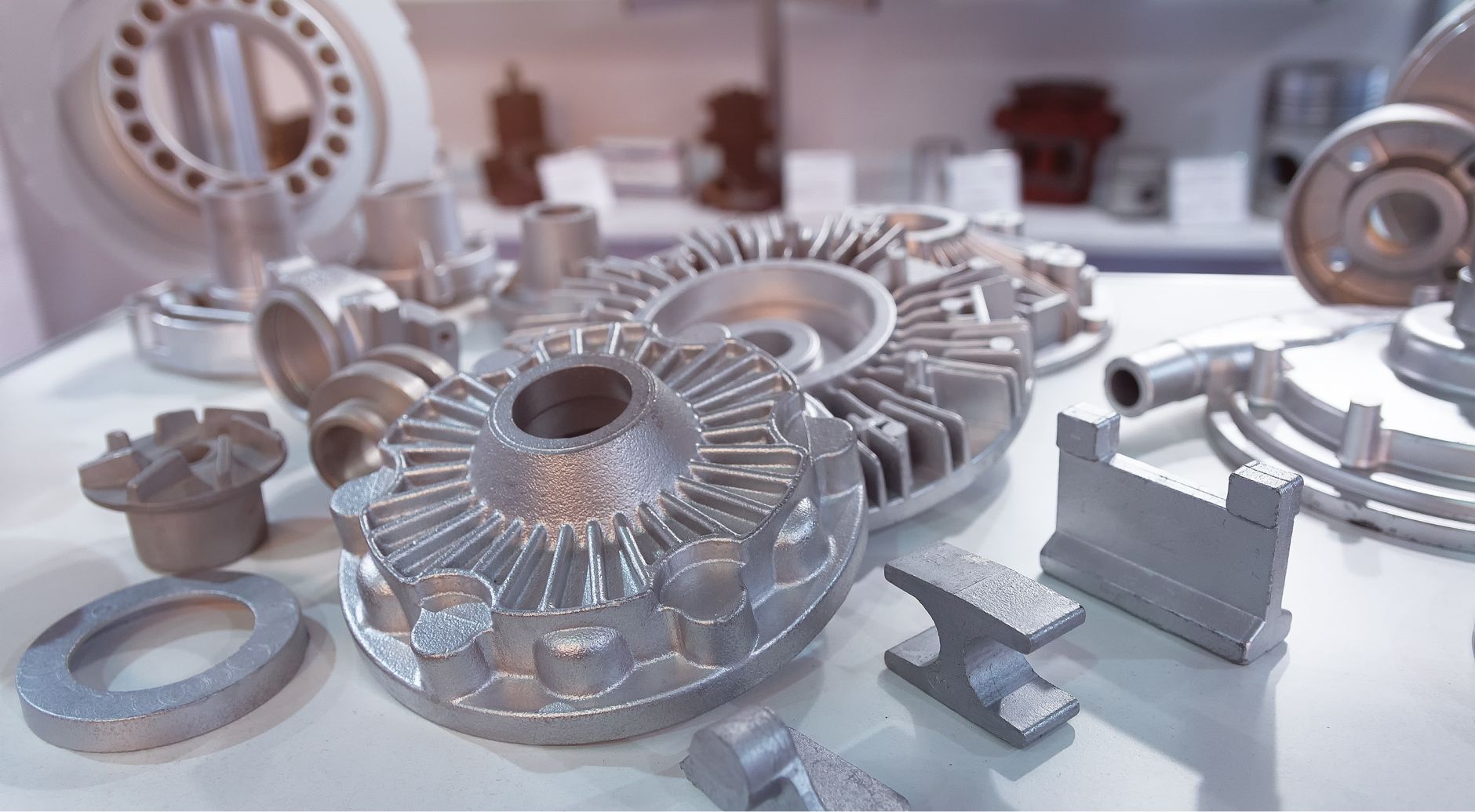
Investment casting vs. CNC machining is the choice engineers face for almost every complex metal component with thin walls or internal passages that a cutting tool cannot reach. For a part that repeats in production or uses a tough, expensive alloy like Inconel, investment casting usually wins on cost and design freedom. For a true one-off or a design still in flux, CNC machining remains the faster route. This guide breaks down where each process wins and gives engineers and project teams a clear signal for when switching from machining to casting pays off.
What Is Investment Casting?
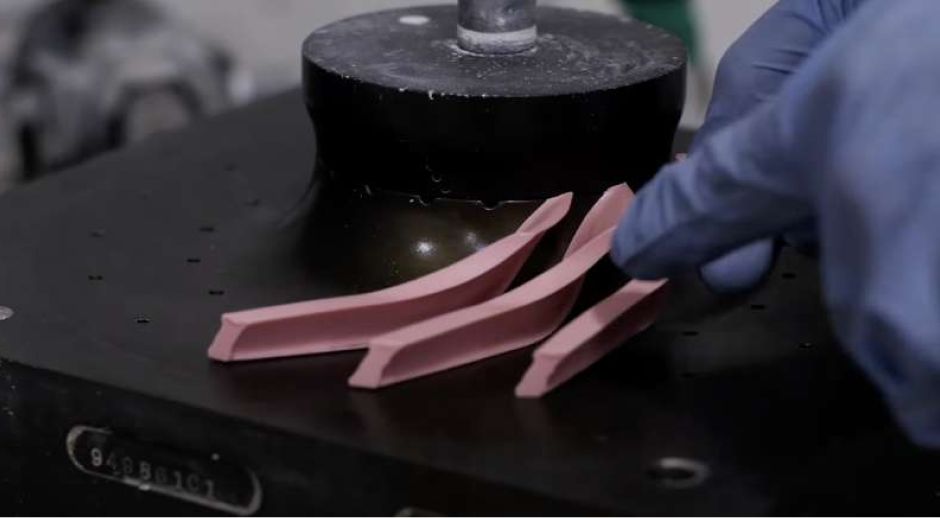
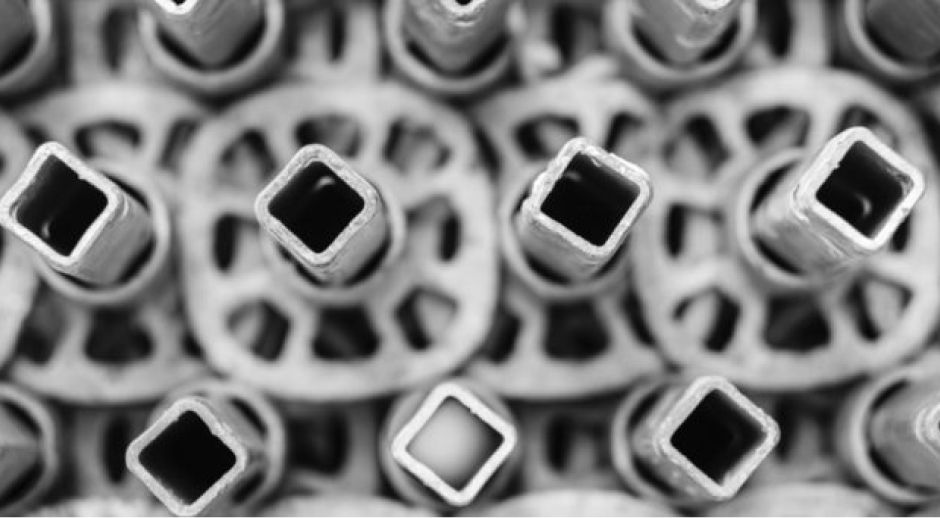
Investment casting builds a mold around a wax pattern of the finished part. We inject wax into a metal die to form a pattern, then assemble the wax patterns onto a tree. Dipping that tree into ceramic slurry builds up a hard shell around each pattern. Once the shell hardens, we melt out the wax and pour molten metal into the remaining cavity. After the metal cools, we break away the ceramic shell to reveal a near-net-shape casting that already carries most of its final dimensions and has a smooth surface finish.
Because the mold captures every detail of the wax pattern, investment casting produces intricate internal passages and thin walls in a single pour, without joining separate pieces together. See our full breakdown of investment casting advantages for a closer look at the process and the alloys it most commonly uses.
What Is CNC Machining?
CNC machining is a subtractive process. A computer-controlled mill or lathe removes material from a solid block of metal, called billet or bar stock, until the finished shape appears. There’s no mold to build and no wax pattern to prepare. A programmer loads a digital model, and the machine cuts directly to that shape.
CNC machining reaches tolerances as tight as plus or minus 0.001 inch on standard equipment, and specialized shops push past that on select features. That precision comes from cutting the material directly rather than shaping it in a mold, but it also means every cubic inch removed from the billet becomes scrap. On a small, simple part, that trade works well. On a large or complex part, the scrap adds up fast.
Casting vs. Machining: Where Each Process Wins
Casting vs. machining isn’t a question of which process is superior. It’s a question of which one fits the part in front of you, given its volume and budget.
Design Freedom for Complex Geometry
Investment casting shapes the part inside the mold, so internal passages and undercuts form in a single pour. CNC machining removes material with a rotating tool that needs a straight line of access to every surface it cuts. A cutting tool cannot reach behind an internal rib or inside a fully enclosed cavity without splitting the part into pieces and joining them later, which adds cost and introduces a weak point at every seam.
Near-net-shape casting changes the calculation for parts like these. Our thin-wall precision castings have wall thicknesses as low as 0.040 inch, a dimension that would require extensive fixturing and multiple setups to machine from solid stock, if machining could manage it at all.
Material Waste and Cost at Volume
Machining a part from a billet removes 50 to 90 percent of the starting material as scrap, and this ratio gets worse as the part becomes more complex. On a stainless steel part, that waste is a rounding error. On a nickel-based superalloy or a cobalt alloy, where raw material carries a premium price, that scrap rate turns into a real cost.
Investment casting pours metal close to its final shape, so it removes only a small fraction of that material. Once we build the tooling, unit cost tends to drop with volume, while machining cost stays roughly flat because material and machine time scale with each additional part.
Tolerances: As-Cast vs. As-Machined
Compared to CNC machining’s typical tolerance of plus or minus 0.001 inch, as-cast investment casting tolerances are typically wider, ranging from CT4 to CT8 on the international casting tolerance grade scale, or roughly 0.014 to 0.055 inches for a mid-size dimension.
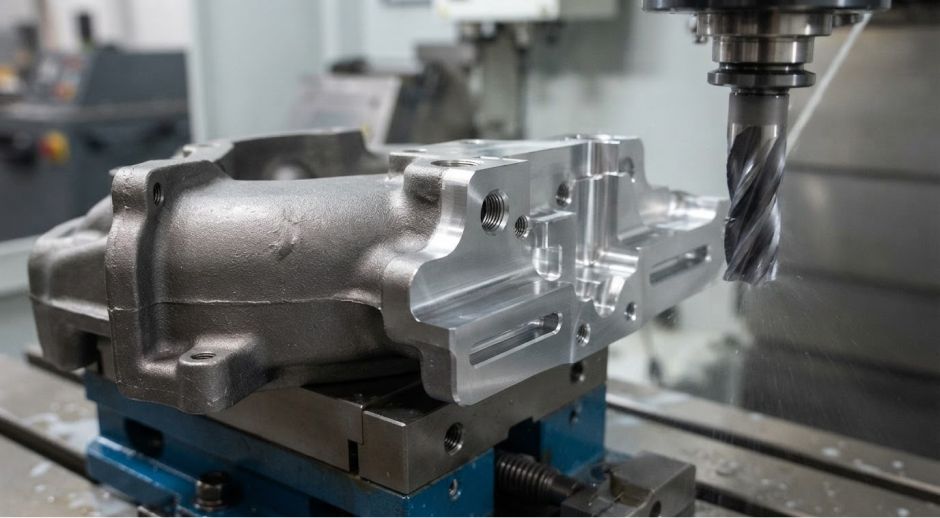
That gap doesn’t rule out casting for tight-tolerance parts. It’s why we finish select features with in-house CNC milling and machining after the pour, holding the casting’s near-net shape everywhere it counts and machining only the specific surfaces or mating faces that need a tighter number.
Lead Time and Tooling
CNC machining needs no mold, so a single prototype can start cutting the same day a model is approved. Investment casting requires a wax injection die before the first part is produced, and building that tooling typically takes several weeks.
Once we build the tooling, the equation flips. Casting produces a tree of parts in a single pour, and running additional parts costs a fraction of what a new machining setup would cost per unit. For a one-time part, machining wins on lead time. For a part that will run again, casting tooling pays for itself, and every future order ships faster than a part cut fresh from billet.
When To Switch From CNC Machining to Investment Casting
A few signals tell you it’s time to move a design from machining to investment casting:
- The part repeats in production runs rather than staying a one-off
- The geometry includes internal features and undercuts that a mill cannot reach cleanly, or walls thinner than machining can reliably hold
- The material is an expensive superalloy where scrap rate drives cost, such as Inconel or a cobalt-based alloy
- Assembly currently requires welding two or more machined pieces together to form one part
If two or more of these apply, the tooling investment for investment casting usually pays back within the first production run or two.
When CNC Machining Still Makes Sense
Investment casting doesn’t fit every project, and CNC machining still stands as the better call in a few common situations:
- A true one-off or a design still likely to change before it’s final
- A simple geometry with no internal features, where a mill can cut the whole part in one setup
- A very small order where the tooling cost has no volume to spread across
- A prototype needed for fit and function testing before committing to cast tooling
If you’re validating a design before locking it in, our rapid prototype casting process offers a third option: casting a working prototype in the same alloy as the final production, without cutting it from a billet or waiting on hard tooling.
The Hybrid Approach: Cast Near-Net Shape, Finish In-House
Most complex components don’t need a single answer. We pour the casting to near-net shape, then finish tight-tolerance features with CNC milling and machining in the same facility, under the same quality system. That vertical integration means a casting engineer and a machinist review the same print and catch fit issues before the pour. The part ships finished, without going to a second vendor for machining.
The Investment Casting Advantages Engineers Rely On for Complex Components
For an engineer weighing investment casting vs. CNC machining on a complex part, the advantages line up around a few consistent points:
- Design freedom for internal passages and undercuts that a cutting tool cannot reach
- Wall thicknesses thinner than most milling setups can hold
- Lower material waste on high-value alloys like Inconel and other nickel-based superalloys
- Fewer separate pieces to join, which removes weld seams and assembly steps
- A surface finish smooth enough to skip secondary polishing on most external features
- Repeatability from part to part, once we qualify the tooling, since every casting comes from the same mold
What Near-Net Shape Casting Means for Complex Components
Near-net-shape casting, also called net-shape casting, refers to a part that comes out of the mold already close to its final dimensions, with little machining left to do. We can pour walls as thin as 0.040 inches and achieve an average surface finish of around 125 microinches straight out of the shell, without a secondary polishing step.
For a complex component with intricate internal geometry, net-shape casting eliminates most machining time before a cutting tool ever touches the part. That’s a direct advantage for high-value alloys, where every pound of scrap carries real cost, and for programs where machine shop capacity is the bottleneck.
Where This Decision Shows Up in Real Components
Engineers run this decision every time a new component reaches the design stage in projects like aerospace or industrial gas turbine work. A turbine blade with internal cooling passages is a common example of a part where casting wins, because machining that geometry from a billet would require splitting the part into two or more pieces and welding them back together. A structural housing with ribbing on the inside runs into the same problem.
A simple mounting bracket or a flat plate with a few drilled holes is the kind of part where CNC machining is the faster and cheaper route, since there’s no internal geometry that favors casting and no repeat volume to spread tooling cost across.
Get a Quote for Your Project Today
If a design includes internal geometry or an alloy that’s expensive to cut from billet, talk to our engineers before committing to a machining plan. We’ll review the print and flag where investment casting removes cost and machining time. Then we’ll scope tooling against your production volume. Contact Bescast for a quote.
Frequently Asked Questions About Investment Casting vs. CNC Machining
Does investment casting eliminate the need for CNC machining?
No. Investment casting substantially reduces machining by pouring the part close to its final shape, but most complex components still need a small amount of CNC work on critical bores or mating faces.
How many parts do I need before investment casting tooling costs make sense compared to machining?
It depends on part complexity and material, but many programs recover tooling cost within the first production run once volume reaches the low hundreds of parts. A simpler geometry in a lower-cost alloy may need higher volume to justify tooling. A complex part in a high-value superalloy can pay back sooner because it saves significant machining time and scrap per unit.
Can investment casting match CNC machining tolerances without secondary machining?
On most dimensions, yes, within the CT4 to CT8 grades typical of investment casting. On a feature that needs a tolerance tighter than that, a short CNC finishing pass on just that feature gets you there without machining the entire part from billet.